How to Choose Sympathy Wreaths

When you need to send condolences from far away, every choice feels more meaningful. If you are wondering how to choose sympathy wreaths for a funeral or memorial in Spain, the right decision usually comes down to three things – your relationship to the person, the tone of the service, and what will feel respectful to the family receiving it.

How to choose sympathy wreaths with confidence

A sympathy wreath is one of the most traditional funeral flower arrangements. Its circular shape is often chosen to express remembrance, continuity, and lasting love. That makes it especially appropriate when you want your gesture to feel formal, heartfelt, and clearly intended for a service, viewing, or memorial.

If you are ordering from outside Spain, it is natural to worry about getting the details right. You may not know local customs, preferred flower styles, or how quickly an arrangement needs to arrive. The good news is that you do not need expert floral knowledge to make a thoughtful choice. You need a clear sense of the message you want to send.

Start there. Are you honoring a parent, grandparent, sibling, close friend, colleague, or family acquaintance? A wreath sent for an immediate family member is often fuller and more personal. For a friend, extended relative, or business connection, a classic design in soft, respectful colors may feel more appropriate. There is no single perfect option. What matters most is that the arrangement matches the depth of your sympathy and the setting in which it will be received.

Think first about the service and setting

Before selecting flowers, consider where the wreath will be displayed. Funeral homes, churches, cemeteries, and memorial venues may each suit a slightly different style. A larger wreath can make sense for a formal funeral service, while a more understated design may be better for a smaller gathering or private family farewell.

If you are sending flowers directly to a funeral location in Spain, timing matters just as much as design. Sympathy arrangements need to arrive before the service, not after. This is where a local florist network makes a real difference, especially when you are ordering internationally and need reliability as much as beauty.

It also helps to think about whether the family is likely to appreciate a formal tribute piece or something more gentle and simple. In some cases, a wreath is the right choice because it is traditional and visible during the service. In others, a funeral spray or sympathy bouquet may feel more in line with the family’s wishes. If you know the family prefers classic funeral flowers, a wreath is a safe and meaningful option.

Choose flowers that reflect the right emotion

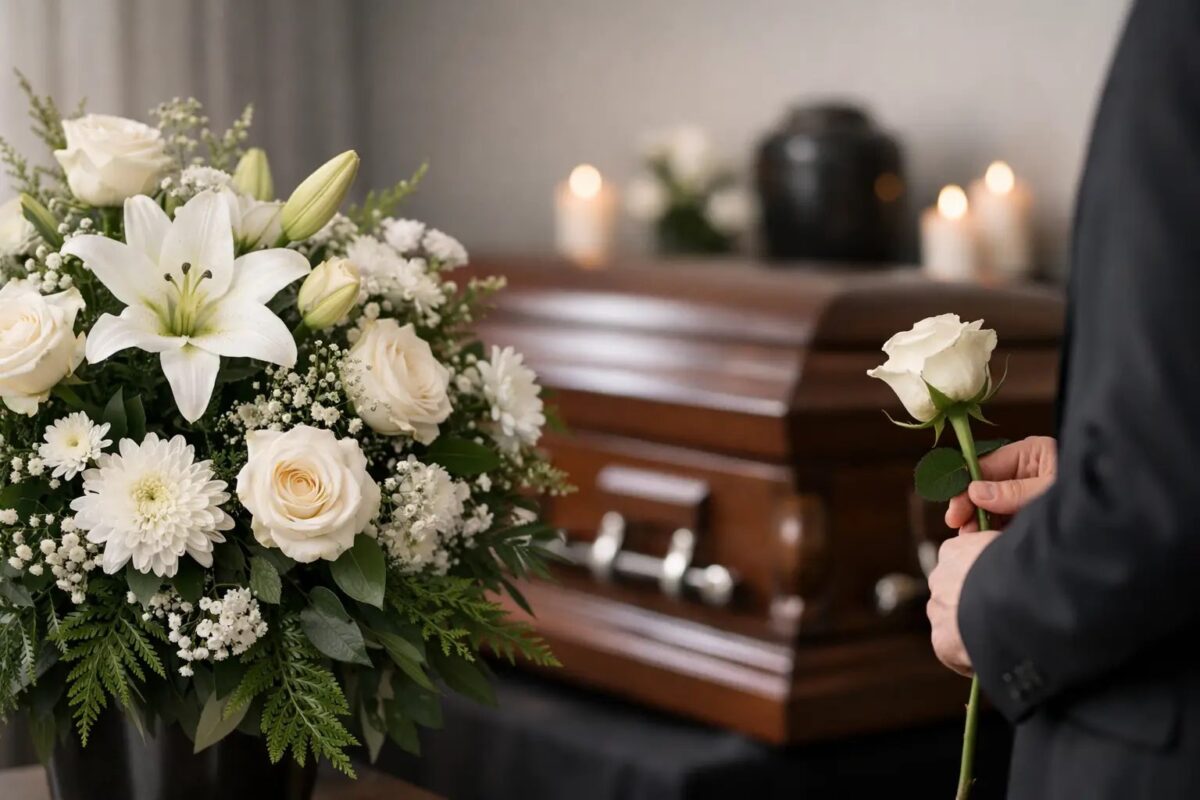
Flowers carry different emotional tones, even when the overall message is sympathy. White flowers are the most traditional for funeral wreaths because they suggest peace, purity, and remembrance. Lilies, roses, carnations, chrysanthemums, and orchids are all commonly used in sympathy designs.

White lilies often feel elegant and solemn, which makes them a strong choice for close family tributes. White roses communicate respect and enduring love. Carnations are often included because they hold their shape well and give wreaths a full, graceful look. Chrysanthemums are especially associated with remembrance in many funeral traditions, so they can be very fitting in this context.

Soft pastel shades can also work beautifully if you want the arrangement to feel tender rather than severe. Pale pink, cream, lavender, and soft peach can express affection and warmth, particularly when honoring someone known for kindness, gentleness, or a bright spirit. Stronger colors like deep red can be appropriate too, but they usually feel more personal and intense. They are often best reserved for close relationships unless you know the family would welcome a bolder tribute.

The trade-off is simple. White and soft neutrals are almost always safe and respectful. More colorful wreaths can feel deeply personal, but they require a little more confidence about the person being honored and the tone of the service.

Size matters, but not always the way people think

Many people assume a larger wreath is automatically better. Not necessarily. A large arrangement can be appropriate when sent on behalf of an immediate family, a group, or a company. It can also suit a prominent display at a church or funeral home. But for an individual sender, especially someone offering condolences from abroad, a medium-sized wreath is often the most balanced choice.

What you want is presence without excess. An arrangement should look generous and sincere, not overstated. If you are unsure, choose a classic wreath in a moderate size with quality flowers and a clean design. That usually feels more thoughtful than simply choosing the biggest option available.

This is especially helpful for international buyers who may not be able to confirm venue size or display space. A professionally arranged medium wreath gives you the dignity of a formal funeral tribute without risking something too large for the setting.

Add a ribbon or card that says the right thing

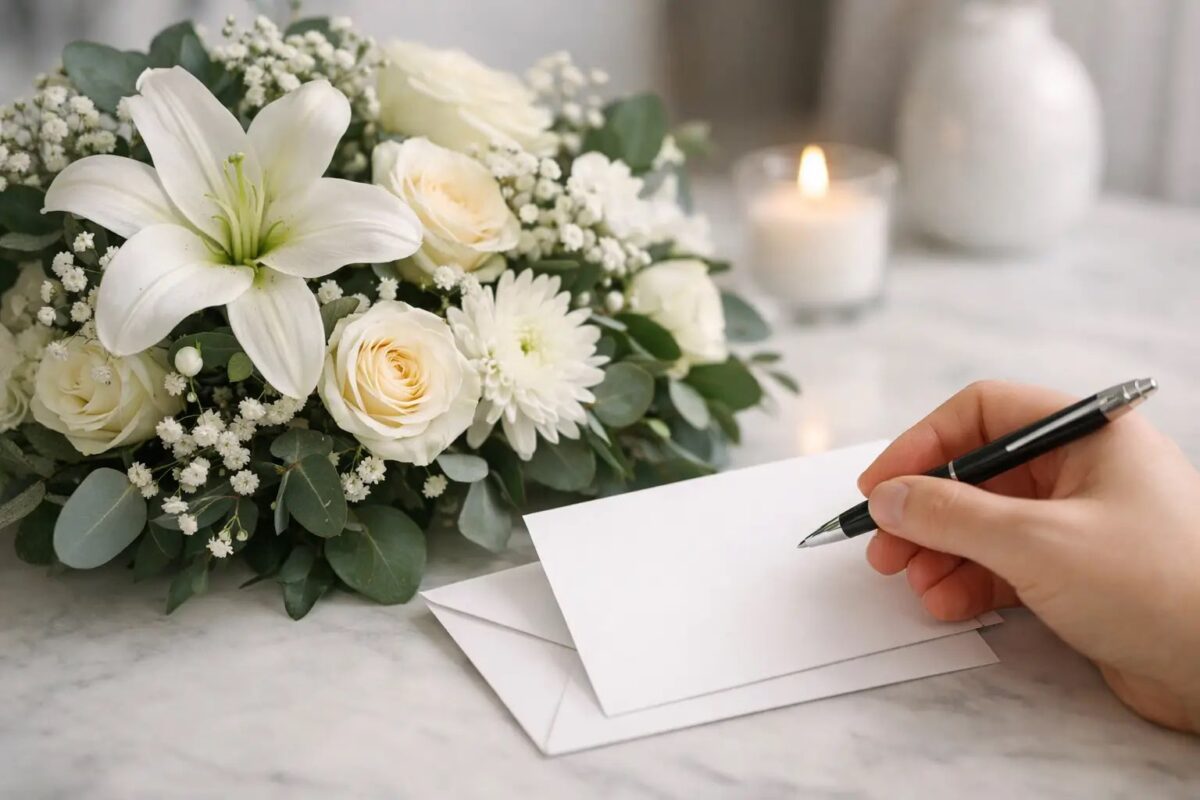
One of the most personal parts of any sympathy wreath is the message that goes with it. Even a short note can make the arrangement feel far more intimate and comforting. If the wreath includes a ribbon, the wording is usually brief – phrases like “With Love,” “In Loving Memory,” or “Our Deepest Sympathy” are traditional and appropriate.

A card allows for a little more warmth. You do not need to write something long. In fact, simple often feels strongest at a time like this. A message that shares love, support, and remembrance is enough. If you are sending on behalf of family members in the US or another country, make that clear so the recipients know exactly who the tribute is from.

If language is a concern, it is perfectly reasonable to keep your message straightforward. The emotional weight comes from sincerity, not from trying to sound formal.

Continue reading “How to Choose Sympathy Wreaths”

When Should Funeral Flowers Arrive?

A funeral is one of those moments when timing carries real emotional weight. If you are arranging flowers from outside Spain, it is completely normal to ask when should funeral flowers arrive so they feel supportive, respectful, and present at the right moment.In most cases, funeral flowers should arrive at least a few hours before the service begins. That gives the funeral home, church, or memorial venue time to receive them, place them properly, and make sure the arrangement is part of the setting before family and guests arrive. If the flowers are being sent to the family’s home rather than the service itself, the best timing is usually as soon as you hear the news or within the days just before the funeral.

When should funeral flowers arrive for the service?

If the flowers are meant to be displayed at the funeral, viewing, or memorial, same-day delivery is not always the safest choice unless there is enough time to coordinate properly. Earlier is usually better. A delivery window of the morning of the service, or the afternoon before, is often ideal.

That said, the right timing depends on the type of venue. Funeral homes are generally used to receiving sympathy arrangements and can often accept them in advance. Churches and other religious venues may have stricter opening hours or more limited staff on site. Cemeteries can be even more specific, especially if the flowers are intended for a graveside service. A local florist usually understands these practical differences and can time delivery more accurately than someone ordering from abroad could manage alone.

If you know the service starts early in the day, sending flowers the day before can be the safest option. If the service is later in the afternoon, delivery that same morning may work perfectly well. What matters most is avoiding a last-minute arrival after the ceremony has started.

When should funeral flowers arrive at a family home?

Home delivery follows a different rhythm. In that case, the flowers are not being timed for public display at a service. They are being sent as a personal gesture of sympathy. That means they can arrive shortly after the loss is announced, in the days leading up to the funeral, or even in the week after.

Many people worry that sending flowers after the funeral is too late. It usually is not. Families often continue receiving messages, food, plants, and flowers after the service, and those gestures can mean a great deal once the busiest part has passed. If you missed the funeral date or were not informed in time, sending sympathy flowers to the home is still thoughtful and appropriate.

For close family, earlier delivery may offer comfort during a difficult few days. For friends, colleagues, or extended relatives, delivery after the service can feel just as kind. There is some flexibility here, and that can be reassuring if you are ordering internationally.

What can affect when funeral flowers should arrive?

The simple answer is before the service or soon after the loss, but real situations are not always simple. Timing can shift based on several factors.

The first is the type of arrangement. Large wreaths, standing sprays, and funeral pillows are usually intended for the service, so they should arrive well before it begins. Smaller bouquets or sympathy flowers can work better for delivery to the home. If you are unsure, the arrangement itself can guide the timing.

The second is local custom. Funeral traditions in Spain can move quickly, and services may be scheduled sooner than some US-based customers expect. In certain cases, there is less time between the announcement of a death and the ceremony. That makes prompt ordering especially important if you want the flowers present at the funeral rather than sent afterward.

The third is venue acceptance. Not every location receives flowers in the same way. Some funeral homes accept deliveries all day, while others have narrower windows. Some family homes may not be easy to access if relatives are spending much of their time away from home. Good florist coordination matters here.

The fourth is your relationship to the family. Immediate family and very close friends often send flowers for the service itself. More distant friends, business contacts, or people living abroad may choose home delivery if they are worried about timing. Neither option is wrong. The most respectful choice is the one that can be handled reliably.

If you are sending funeral flowers to Spain from abroad

This is where many customers feel anxious, and for good reason. You are trying to send comfort across countries, often with little notice, different time zones, and limited local information. The question of when should funeral flowers arrive becomes not just etiquette, but logistics.

If the funeral is in Spain, ordering through a local florist network is usually the most dependable approach. Local florists know area funeral homes, churches, delivery routes, and same-day possibilities. That local knowledge helps reduce the risk of confusion over addresses, language, or scheduling.

For international customers, the safest approach is to place the order as soon as you have the service details. Even if same-day delivery is available, earlier ordering gives the florist more room to prepare the arrangement properly and coordinate with the venue. During emotional moments, that extra margin matters.

Flowers To Spain can be especially helpful in this situation because the arrangements are fulfilled by local Spanish florists. For someone ordering from the US or another country, that means better freshness, faster handling, and more confidence that the tribute will reach the right place at the right time.

Continue reading “When Should Funeral Flowers Arrive?”

How to Send Funeral Flowers Internationally

When a funeral is taking place in another country, timing and clarity matter as much as the flowers themselves. If you are wondering how to send funeral flowers internationally, the simplest path is to work with a florist service that knows the local customs, delivers directly in the destination country, and can help you choose an arrangement that feels respectful and appropriate.Sending sympathy flowers to Spain from abroad can feel overwhelming at first. You may be grieving, managing family messages across time zones, and trying to make a thoughtful decision without knowing which funeral arrangements are customary there. The good news is that the process can be straightforward when you focus on the essentials – the right tribute, the right delivery location, and the right timing.

How to send funeral flowers internationally without added stress

The first decision is where the flowers need to go. Funeral flowers are often delivered to a funeral home, memorial chapel, church, or the family home, and each option carries a slightly different meaning. A wreath or standing tribute is usually more suitable for a service venue, while a softer bouquet or sympathy basket may be better for the family residence after the ceremony.

This is where international orders can go wrong if the details are incomplete. You need the full recipient name, the name of the deceased if different, the exact venue address, the date and time of the service if available, and a local contact number. Even when a florist network handles delivery well, missing details can create delays on a day when every hour matters.

Choosing a provider with local florist fulfillment in Spain can make a real difference. Local florists know the area, understand how funeral deliveries are handled, and can prepare fresh arrangements close to the delivery point. That usually means better timing, better condition on arrival, and fewer complications than trying to route flowers across borders physically.

Choosing the right funeral flowers for delivery in Spain

Not every sympathy arrangement says the same thing. If your relationship to the deceased was close, a formal funeral wreath, cross, pillow, or standing arrangement may feel appropriate. If you are sending condolences on behalf of a friend, coworker, or extended family member, a bouquet, basket, or elegant white floral arrangement can be more fitting.

White flowers are a classic choice for sympathy because they express peace, respect, and remembrance. Roses, lilies, chrysanthemums, carnations, and orchids are all commonly used in funeral arrangements. Soft mixed bouquets can also work well when you want something gentle rather than ceremonial.

It depends, though, on the setting and on the family. Some services are very traditional, while others are more personal and less formal. If you are unsure, choosing a refined arrangement in white or soft neutral shades is usually a safe and respectful option.

A condolence message matters just as much as the flowers. Keep it short, sincere, and readable. You do not need to write a long note. A few heartfelt lines such as expressing your sympathy, naming the deceased, and letting the family know they are in your thoughts is enough.

What to check before placing an international funeral flower order

Before you complete the order, slow down and confirm the practical details. This step saves a lot of heartache later.

Start with the service schedule. Funeral flowers are time-sensitive in a way birthday or anniversary flowers are not. If the ceremony is the same day or the next morning, ask whether same-day delivery is available and what the cutoff time is. A reliable service should be clear about timing, especially for deliveries across Spain.

Next, confirm the destination type. A funeral home may accept large ceremonial pieces, while a private home may not be the right place for something oversized. If the family is receiving visitors at home after the service, a sympathy bouquet or plant may feel more comforting and practical.

You should also check whether the florist can deliver on weekends or public holidays. In some cases, service timing varies by city or region. That does not always prevent delivery, but it can affect which arrangements are available and when they can arrive.

Finally, review the card message, spelling of names, and phone number one more time. Funeral deliveries are deeply personal, and small errors feel bigger in emotional moments.

Continue reading “How to Send Funeral Flowers Internationally”

What to Write on Sympathy Flowers

When you are grieving from far away, even a small card can feel heavy. If you are wondering what to write on sympathy flowers, the right words are usually the simplest ones – kind, sincere, and focused on comfort rather than trying to fix the loss.

What to write on sympathy flowers when words feel hard

A sympathy flower message does not need to be long to be meaningful. In fact, funeral cards and ribbon messages are often short by necessity. A few honest words can say more than a long paragraph, especially when the family is overwhelmed and reading many messages in a difficult moment.

The safest approach is to keep your note warm, respectful, and personal. You can acknowledge the loss directly, mention your love or support, and, if it feels right, include the name of the person who has passed away. That small detail makes the message feel less generic and more heartfelt.

If you did not know the deceased well, you do not need to pretend that you did. It is enough to write something simple for the family, such as, “Thinking of you with deepest sympathy” or “Sending love and comfort to your family.” If you were close to the person who passed, you can be more personal and say, “I will always remember Maria’s kindness” or “Javier will be deeply missed and lovingly remembered.”

Keep the message short, sincere, and easy to read

Many people overthink sympathy cards because they are afraid of saying the wrong thing. That is understandable. But in most cases, families are not looking for perfect wording. They are looking for a sign that someone cares.

A good sympathy message usually does one of three things. It offers condolences, shares affection, or reminds the family that they are not alone. You can do all three in one short note, but you do not have to. Sometimes one gentle sentence is enough.

These are the kinds of messages that work well on sympathy flowers:

“With deepest sympathy.”

“Thinking of you during this difficult time.”

“Sending our love and heartfelt condolences.”

“With love and remembrance.”

“Our hearts are with you.”

“In loving memory.”

“Gone but never forgotten.”

“Keeping you in our thoughts and prayers.”

If you want your message to feel a little more personal, add the recipient’s name or the name of the person being remembered. Even a brief line like, “In loving memory of Carlos” can make the arrangement feel more intimate.

What to write on sympathy flowers for different relationships

The best message often depends on who you are sending the flowers to. A note for a close family member will usually sound more personal than one sent to a colleague or family friend.

For close family

If you are sending flowers to parents, siblings, children, or relatives, your message can be tender and direct. You do not need formal language. A line such as, “We are holding you close in our hearts,” or “All our love is with you today,” feels personal without being too long.

If the person who passed away was also meaningful to you, you can say that plainly. “We will miss Dad so much” or “Aunt Elena will always be remembered with love” can be deeply comforting because they honor shared grief.

For friends

For friends, a warm and supportive tone is usually best. Try something like, “I am so sorry for your loss,” or “Sending love to you and your family.” If you knew the deceased, a short memory can also work well, as long as it stays concise enough for a flower card.

For coworkers or professional contacts

If your relationship is more formal, it is better to keep your message respectful and understated. “Please accept our sincere condolences” or “Thinking of you and your family at this sad time” are both appropriate. These messages feel caring without crossing professional boundaries.

For religious families

If you know the family finds comfort in faith, including a spiritual line can feel natural and supportive. “Keeping you in our prayers” or “May God grant you peace and comfort” are common choices. If you are unsure about their beliefs, it is safer to choose a nonreligious message.

Message ideas you can use right away

Sometimes you need a message quickly, especially if you are arranging delivery from another country and want everything handled without extra stress. These examples are short enough for most sympathy flower cards and suitable for many situations.

For a traditional message, you might write, “With heartfelt sympathy,” “Our deepest condolences,” or “Thinking of you with love and sympathy.” These are timeless because they are respectful and easy for any family to receive.

For a more personal message, try, “Sending you love during this painful time,” “We are so sorry and are here for you,” or “Remembering Ana with great love.” These feel warmer and are often best when you know the recipient well.

For memorial arrangements or funeral wreaths, many people choose very brief wording such as, “In loving memory,” “Forever in our hearts,” or “With love and remembrance.” When the card is attached to a formal tribute, shorter is often better.

For flowers sent to a home after the service, you can be slightly more conversational. “Wishing you comfort in the days ahead” or “Sending love to your family and thinking of you” can feel especially appropriate after the funeral, when the first wave of support may have quieted down. Continue reading “What to Write on Sympathy Flowers”

A Guide to Funeral Flower Etiquette

When someone you love is grieving in another country, even a simple decision like sending flowers can feel heavier than usual. This guide to funeral flower etiquette is here to make that choice gentler, clearer, and more respectful – especially if you are arranging sympathy flowers for family or friends in Spain from abroad.

Flowers are a quiet gesture, but they carry real meaning. They can honor the person who has passed, show support to the family, and offer comfort when words come slowly. The right choice is not about spending the most or finding the most elaborate design. It is about sending something thoughtful, appropriate, and timed with care.

What funeral flowers are meant to say

Funeral flowers are different from everyday sympathy bouquets. A birthday arrangement is meant to brighten a room. Funeral flowers are meant to express respect, remembrance, and closeness during a difficult moment. That is why etiquette matters.

Still, there is no single rule that fits every loss. The right arrangement depends on your relationship to the deceased or the family, local customs, and whether the flowers are being sent to a funeral home, a church, a cemetery, or the family home. If you are ordering from outside Spain, that extra distance can make the process feel uncertain. A reliable local florist network helps because it brings local knowledge as well as fresh preparation and timely delivery.

A practical guide to funeral flower etiquette

The first question is usually what kind of arrangement to send. Close family members often choose the most formal funeral pieces, such as wreaths, crosses, sprays, or funeral pillows. These are larger tributes intended for the service itself and are often placed near the casket or ceremony area.

If you are a friend, colleague, extended relative, or neighbor, a sympathy bouquet or tasteful funeral arrangement is usually more suitable. It shows care without overstepping. This is one of the most useful parts of any guide to funeral flower etiquette: matching the scale of the flowers to the closeness of the relationship.

Price can matter here too, and that is perfectly normal. A meaningful gesture does not need to be extravagant. A smaller arrangement prepared by a skilled local florist can feel far more personal than something oversized chosen in haste. Respect and sincerity matter more than volume.

When to send flowers

Timing changes the message. If the flowers are meant for the funeral or memorial service, they should arrive before the ceremony begins. That sounds obvious, but international orders need a little more planning. Time zones, language differences, and local delivery logistics can all add stress if you wait too long.

If you learn of the loss after the funeral, it is still appropriate to send sympathy flowers to the family home. In fact, many families appreciate receiving flowers in the days after the service, when visitors have gone home and the quiet can feel especially heavy. Late does not mean inappropriate. It simply changes the purpose from ceremonial tribute to personal comfort.

For urgent situations, same-day delivery can be especially helpful when available. For someone living in the US and sending flowers to Spain, that kind of service can remove a lot of uncertainty at a difficult time.

Where the flowers should go

This part depends on the family’s plans. Flowers sent to a funeral home, church, or memorial venue are usually more formal. Flowers sent to a private residence are often softer and more personal.

If you are not sure where to send them, ask a family member or the person coordinating arrangements if possible. If that feels intrusive, choose a home delivery sympathy bouquet instead of a large funeral tribute. It is the safer option when details are unclear.

One important exception is when the obituary or family notice says “in lieu of flowers.” If that request has been made, follow it. The family may prefer donations, private mourning, or a simpler service. In etiquette terms, respecting that wish is more thoughtful than sending flowers anyway.

Choosing the right flowers and colors

People often worry about choosing the “wrong” flowers, but funeral etiquette is less rigid than many fear. White flowers are the most traditional because they symbolize peace, purity, and remembrance. Cream, soft pink, and pale pastel tones are also commonly appropriate.

Red roses can be suitable in some cases, especially for a spouse or very close family member, because they express deep love and devotion. Mixed arrangements can also work beautifully when designed in a restrained, respectful style. Bright, cheerful colors are not automatically wrong, but they should be chosen carefully. If the family would appreciate a celebration of life feel, a touch of color can be meaningful. If the tone of the service is formal and traditional, softer colors are usually a better choice.

Religious and regional customs can shape these choices as well. In Spain, funeral flowers are commonly formal and elegant, and wreaths are especially familiar. That does not mean every family wants the same thing, but if you are sending from abroad and want a safe, respectful option, classic funeral arrangements are usually the best place to start.

What to write on the card

Many people find the message harder than choosing the flowers. Keep it short, sincere, and personal. Funeral card messages do not need to be poetic. In fact, the simplest words are often the most comforting.

A note such as “With deepest sympathy,” “Thinking of you and your family,” or “Sending love during this difficult time” is always appropriate. If you knew the person who passed away, you can mention them gently: “In loving memory of Maria” or “We will always remember his kindness.”

Avoid anything too casual, overly detailed, or unintentionally cheerful. This is not the moment for long explanations. If you are sending flowers on behalf of a family, business, or group of friends, make that clear in the signature so the recipients know who the tribute is from.

Should you send flowers if you are not close?

Yes, often you can. Flowers are a respectful way to acknowledge loss even if your relationship was not intimate. A coworker, client, neighbor, or distant relative may still appreciate the gesture. The key is to choose something modest and appropriate rather than highly personal or grand.

If you are worried about whether flowers might feel too much, ask yourself what your intention is. If it is to offer comfort without drawing attention to yourself, a simple sympathy arrangement is usually welcome.

Continue reading “A Guide to Funeral Flower Etiquette”