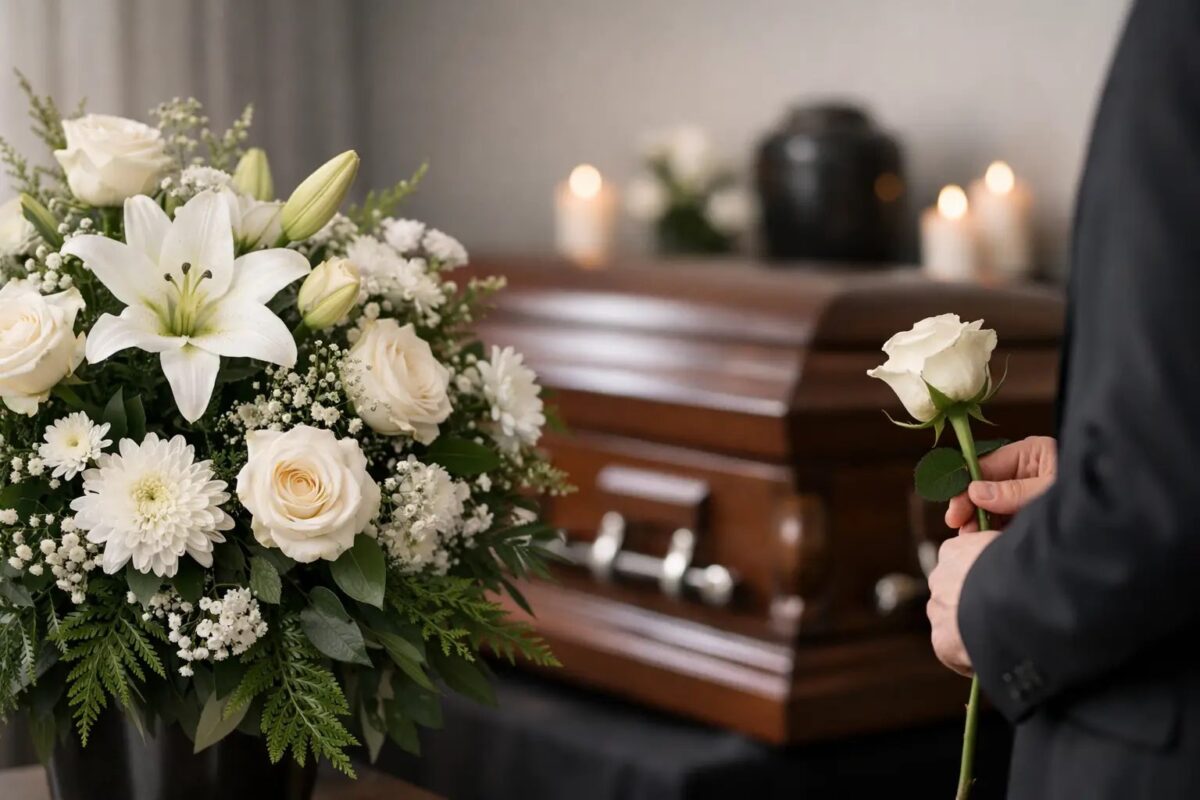
Flowers are a quiet gesture, but they carry real meaning. They can honor the person who has passed, show support to the family, and offer comfort when words come slowly. The right choice is not about spending the most or finding the most elaborate design. It is about sending something thoughtful, appropriate, and timed with care.
What funeral flowers are meant to say
Funeral flowers are different from everyday sympathy bouquets. A birthday arrangement is meant to brighten a room. Funeral flowers are meant to express respect, remembrance, and closeness during a difficult moment. That is why etiquette matters.
Still, there is no single rule that fits every loss. The right arrangement depends on your relationship to the deceased or the family, local customs, and whether the flowers are being sent to a funeral home, a church, a cemetery, or the family home. If you are ordering from outside Spain, that extra distance can make the process feel uncertain. A reliable local florist network helps because it brings local knowledge as well as fresh preparation and timely delivery.
A practical guide to funeral flower etiquette
The first question is usually what kind of arrangement to send. Close family members often choose the most formal funeral pieces, such as wreaths, crosses, sprays, or funeral pillows. These are larger tributes intended for the service itself and are often placed near the casket or ceremony area.
If you are a friend, colleague, extended relative, or neighbor, a sympathy bouquet or tasteful funeral arrangement is usually more suitable. It shows care without overstepping. This is one of the most useful parts of any guide to funeral flower etiquette: matching the scale of the flowers to the closeness of the relationship.
Price can matter here too, and that is perfectly normal. A meaningful gesture does not need to be extravagant. A smaller arrangement prepared by a skilled local florist can feel far more personal than something oversized chosen in haste. Respect and sincerity matter more than volume.
When to send flowers
Timing changes the message. If the flowers are meant for the funeral or memorial service, they should arrive before the ceremony begins. That sounds obvious, but international orders need a little more planning. Time zones, language differences, and local delivery logistics can all add stress if you wait too long.
If you learn of the loss after the funeral, it is still appropriate to send sympathy flowers to the family home. In fact, many families appreciate receiving flowers in the days after the service, when visitors have gone home and the quiet can feel especially heavy. Late does not mean inappropriate. It simply changes the purpose from ceremonial tribute to personal comfort.
For urgent situations, same-day delivery can be especially helpful when available. For someone living in the US and sending flowers to Spain, that kind of service can remove a lot of uncertainty at a difficult time.
Where the flowers should go
This part depends on the family’s plans. Flowers sent to a funeral home, church, or memorial venue are usually more formal. Flowers sent to a private residence are often softer and more personal.
If you are not sure where to send them, ask a family member or the person coordinating arrangements if possible. If that feels intrusive, choose a home delivery sympathy bouquet instead of a large funeral tribute. It is the safer option when details are unclear.
One important exception is when the obituary or family notice says “in lieu of flowers.” If that request has been made, follow it. The family may prefer donations, private mourning, or a simpler service. In etiquette terms, respecting that wish is more thoughtful than sending flowers anyway.
Choosing the right flowers and colors
People often worry about choosing the “wrong” flowers, but funeral etiquette is less rigid than many fear. White flowers are the most traditional because they symbolize peace, purity, and remembrance. Cream, soft pink, and pale pastel tones are also commonly appropriate.
Red roses can be suitable in some cases, especially for a spouse or very close family member, because they express deep love and devotion. Mixed arrangements can also work beautifully when designed in a restrained, respectful style. Bright, cheerful colors are not automatically wrong, but they should be chosen carefully. If the family would appreciate a celebration of life feel, a touch of color can be meaningful. If the tone of the service is formal and traditional, softer colors are usually a better choice.
Religious and regional customs can shape these choices as well. In Spain, funeral flowers are commonly formal and elegant, and wreaths are especially familiar. That does not mean every family wants the same thing, but if you are sending from abroad and want a safe, respectful option, classic funeral arrangements are usually the best place to start.
What to write on the card
Many people find the message harder than choosing the flowers. Keep it short, sincere, and personal. Funeral card messages do not need to be poetic. In fact, the simplest words are often the most comforting.
A note such as “With deepest sympathy,” “Thinking of you and your family,” or “Sending love during this difficult time” is always appropriate. If you knew the person who passed away, you can mention them gently: “In loving memory of Maria” or “We will always remember his kindness.”
Avoid anything too casual, overly detailed, or unintentionally cheerful. This is not the moment for long explanations. If you are sending flowers on behalf of a family, business, or group of friends, make that clear in the signature so the recipients know who the tribute is from.
Should you send flowers if you are not close?
Yes, often you can. Flowers are a respectful way to acknowledge loss even if your relationship was not intimate. A coworker, client, neighbor, or distant relative may still appreciate the gesture. The key is to choose something modest and appropriate rather than highly personal or grand.
If you are worried about whether flowers might feel too much, ask yourself what your intention is. If it is to offer comfort without drawing attention to yourself, a simple sympathy arrangement is usually welcome.
Common etiquette mistakes to avoid
The biggest mistake is making assumptions when you do not have enough information. If the family has requested no flowers, if the service is private, or if there are strong religious customs involved, those details matter.
Another common mistake is waiting so long that the flowers arrive after their intended purpose has passed. A funeral wreath delivered to the family home a week later may feel awkward. A sympathy bouquet delivered after the funeral, however, can still feel thoughtful. Matching the arrangement to the timing makes all the difference.
It is also worth avoiding messages that try to explain the loss away. Phrases meant to reassure can sometimes land badly when grief is fresh. A few kind words are enough.
Finally, do not underestimate the value of local fulfillment. When flowers are prepared by local florists, they are more likely to arrive fresh, on time, and in a style that suits local expectations. For international senders, that practical detail brings real peace of mind.
Sending funeral flowers to Spain from abroad
If your loved ones are in Spain and you are far away, the emotional gap can feel sharp. You may not be able to attend the service, help with arrangements, or sit beside the family in person. Sending flowers becomes one of the clearest ways to say, “I am with you, even from here.”
That is why the ordering process should be simple and dependable. Clear funeral categories, respectful arrangement options, and delivery handled by local florists all help you act quickly when timing matters. Flowers To Spain can be a practical choice for that reason, especially when you need a sympathy arrangement delivered across Spain without added stress.
There is no perfect arrangement and no perfect phrase when someone has died. What matters most is that your gesture feels honest, respectful, and timely. If your flowers help a grieving family feel remembered for even a moment, then you have chosen well.